
Introduction
Mailchimp vs ActiveCampaign is one of the most searched comparisons for businesses looking for the best email marketing platform. Both tools offer powerful features for email campaigns, automation, audience management, analytics, and lead generation, but they are designed for different types of users.
In this detailed comparison, we’ll break down the key differences between Mailchimp and ActiveCampaign including pricing, automation, CRM features, ease of use, reporting tools, and overall value for money. By the end of this guide, you’ll know which platform is the better choice for your business needs in 2026.
Table of Contents
Mailchimp vs ActiveCampaign
Executive summary
For a search-driven comparison article, the strongest editorial angle is not to argue that one platform is universally “best,” but to show which platform fits which stage of marketing maturity. Mailchimp is the easier product to learn, has the better zero-cost entry point, and bundles email, landing pages, and a marketing CRM around audience data in a way that feels approachable for small businesses. ActiveCampaign is the more operationally ambitious platform: its real advantage is workflow depth, branching logic, dynamic segmentation, site tracking, lead scoring, and sales-oriented CRM automation that can connect marketing and pipeline management more tightly. Official documentation and recent third-party reviews all point in the same direction on that trade-off.
That means a high-performing article on Mailchimp vs ActiveCampaign should lead with fit, not feature dumping. If your reader is a solo marketer, creator, local business, or early-stage ecommerce brand that mostly needs clean campaigns, basic automations, and simple lead capture, Mailchimp will often look like the safer recommendation. If the reader needs multi-step automation, goal-based routing, sales handoff, scoring, attribution, and a system that can get more powerful as customer journeys become more complex, ActiveCampaign is usually the stronger long-term choice.
For SEO and readability, keep paragraphs short, use direct side-by-side judgments, and make each section answer a practical buyer question. Your screenshots are well suited to that format: they will work best not as decoration, but as evidence that supports the user experience, editor workflow, automation depth, reporting layout, and pricing discussion in the exact order readers expect from a comparison search.
Product foundations and interface
Overview of Mailchimp and ActiveCampaign
In Mailchimp vs ActiveCampaign, Mailchimp should be framed as an all-in-one marketing platform centered on email, audience management, landing pages, forms, and a “marketing CRM” built around customer data, segments, tags, and behavioral targeting. Mailchimp’s own CRM pages emphasize audience dashboards, tags, groups, pre-built segments, customer lifetime value visibility, and automated messaging based on segments or tags rather than a traditional sales-pipeline workflow.
ActiveCampaign, by contrast, should be positioned as an automation-first email and customer engagement platform that can be extended into a more sales-oriented operating system. Its current plan overview describes Starter, Plus, Professional, and Enterprise tiers, with add-ons for enhanced CRM, SMS, transactional email, and custom reporting. Its CRM materials emphasize deals, pipelines, tasks, scoring, and automations that can update ownership, stages, values, and follow-up actions. That is materially different from Mailchimp’s audience-centered approach.
For article positioning, the cleanest summary is this: Mailchimp is a marketing platform that has CRM-like audience intelligence, while ActiveCampaign is a marketing automation platform that can extend into real sales-process orchestration. That distinction will help your reader understand why the same feature label can mean very different things on each platform.
Ease of Use & User Interface
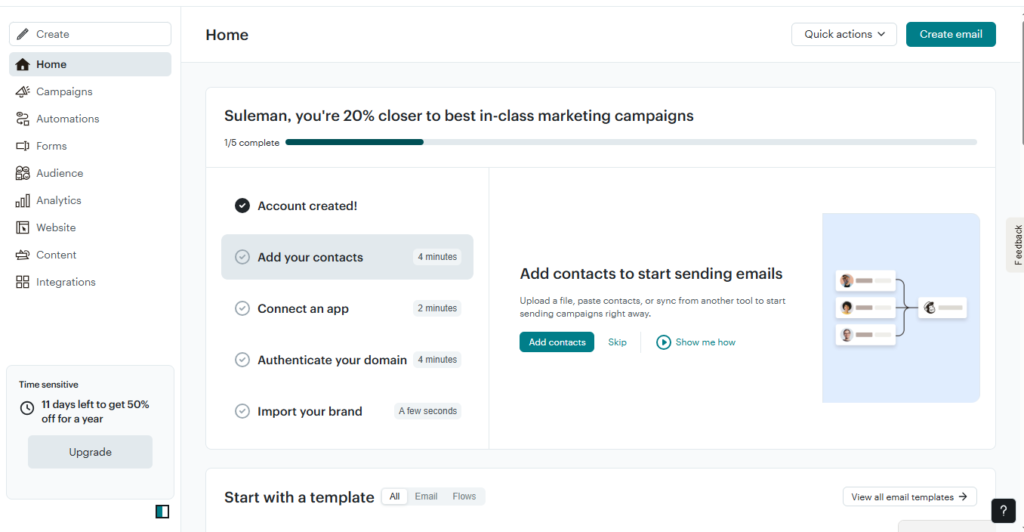
In Mailchimp vs ActiveCampaign, Mailchimp is the easier platform to master for first-time email marketers. Mailchimp’s new builder is presented as the default design experience, and recent reviewers still describe the platform as mostly easy to navigate with an intuitive drag-and-drop editor. TechRadar’s 2026 review also notes that Mailchimp remains user-friendly and attractive for SMBs, even though advanced features increasingly live on higher plans.
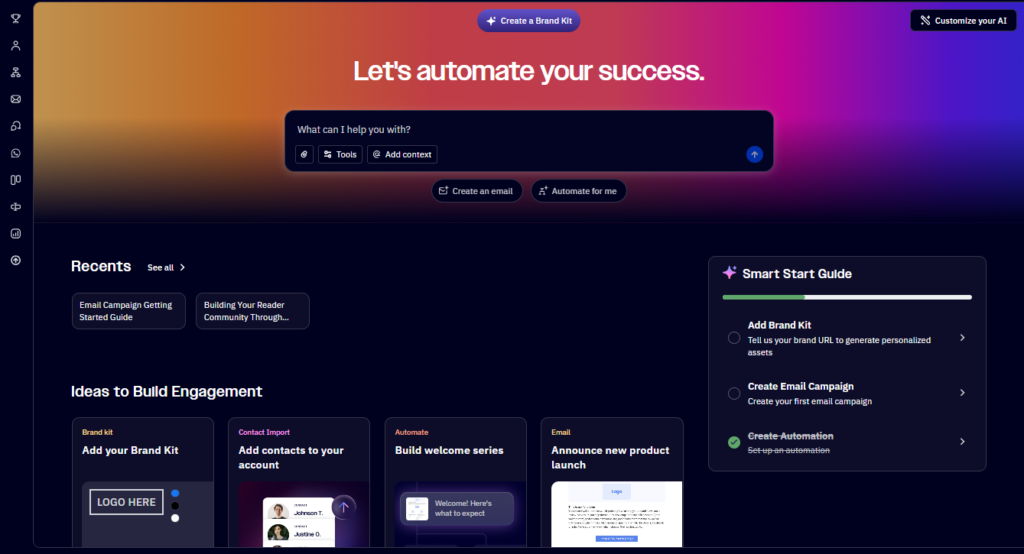
ActiveCampaign is not poorly designed, but it has more conceptual overhead. Official materials emphasize easier campaign creation, a redesigned email designer, and onboarding resources, yet external reviews consistently note a steeper learning curve once you move past newsletters and into automation architecture. EmailTooltester’s current comparison is especially clear here: ActiveCampaign is navigable and polished, but less beginner-friendly because of its depth, while Mailchimp is “definitely easier to master.”
The practical recommendation is simple. If the buyer wants speed to first campaign and the least possible friction, lead with Mailchimp. If the buyer is willing to trade some simplicity for a system that can support more sophisticated lifecycle logic later, ActiveCampaign deserves more weight. That framing is honest, credible, and more useful than scoring “ease of use” in isolation.
Campaign creation and automation
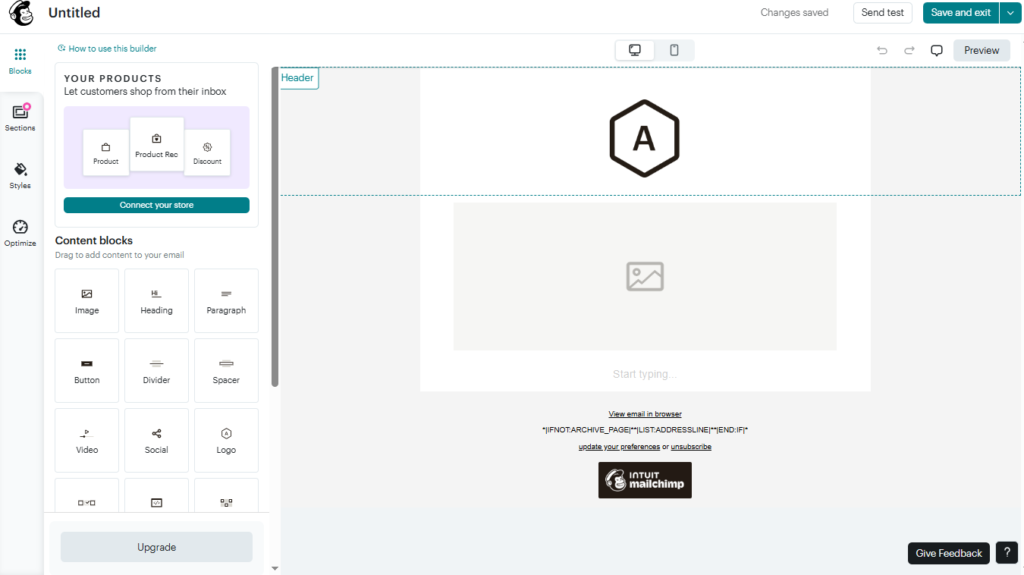
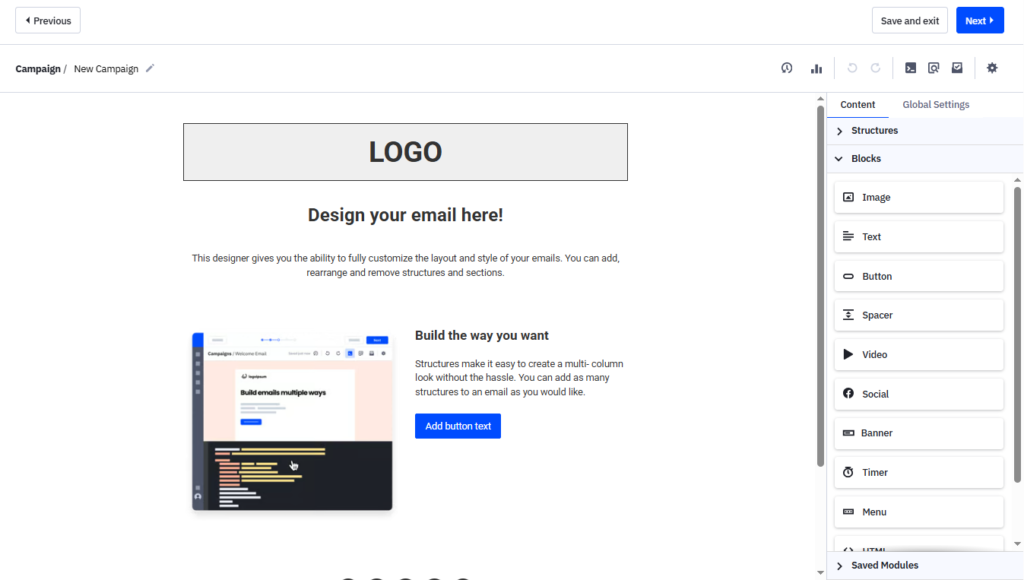
Mailchimp vs ActiveCampaign Email Editor Comparison
For Mailchimp vs ActiveCampaign, the email editor section should avoid vague praise and focus on what the editing experience actually lets a marketer do. Mailchimp currently supports both a new builder and a legacy builder. The new builder includes drag and drop content blocks, templates, undo/redo, and newer blocks such as Apps and Survey; the legacy builder still matters because it is the only option for custom-coded templates and RSS content. Mailchimp also offers dynamic content, but that feature is available on Standard and Premium plans.
ActiveCampaign’s editor is stronger when you talk about layout control and advanced block options. Its Email Designer uses drag-and-drop “Structures” and “Blocks,” supports one- to four-container layouts, and includes ten core block types such as image, text, button, video, social, HTML, banner, timer, and menu. It also supports AI-assisted copy generation inside text blocks. That gives you a sharper argument than just saying the editor is “flexible.”
The fairest editorial conclusion is that Mailchimp wins for immediacy and familiarity, while ActiveCampaign wins for design control and more advanced email-building options. If you want a nuanced sentence that will resonate with ranking readers, use something like: “Mailchimp feels friendlier on day one, but ActiveCampaign gives power users more room to build sophisticated emails without leaving the platform.” That conclusion is consistent with both official product docs and recent hands on reviews.
Mailchimp vs ActiveCampaign Automation Features Compared
This is the section where Mailchimp vs ActiveCampaign usually gets decided. Mailchimp’s automation product is real, but it is deliberately simpler. Mailchimp says its automation flows can trigger based on audience data points and offers pre-built templates for welcome emails, abandoned cart reminders, birthday emails, review requests, product confirmations, and other common lifecycle flows. On the plan side, Essentials includes automation flows with up to four steps, while Standard expands automation capabilities and templates.
ActiveCampaign’s official documentation makes a much stronger automation case. Starter includes email marketing automation, site tracking, A/B campaign tests, and five actions per automation. Plus adds multichannel automation, more triggers and actions, landing pages, and AI content generation. Professional adds advanced triggers and actions, connected automations, automation A/B testing, conditional content, predictive sending, revenue and conversion attribution, and custom event tracking. ActiveCampaign also supports multiple automation triggers, split actions, automation maps, site tracking, deal automation, and CRM-triggered workflows.
That gap is why reviewers consistently give the automation round to ActiveCampaign. EmailTooltester’s 2026 comparison says Mailchimp’s automation “pale[s] in comparison” next to ActiveCampaign’s ability to mix triggers, actions, conditions, scoring, segmentation, and tagging into more sophisticated workflows. For an analytical article, that is the most defensible macro-conclusion: Mailchimp is enough for straightforward nurture and ecommerce basics, while ActiveCampaign is built for branching customer journeys.
Mailchimp Automation Builder
Mailchimp’s Customer Journey builder is designed for beginners and allows users to create automated email sequences with a simple visual interface.
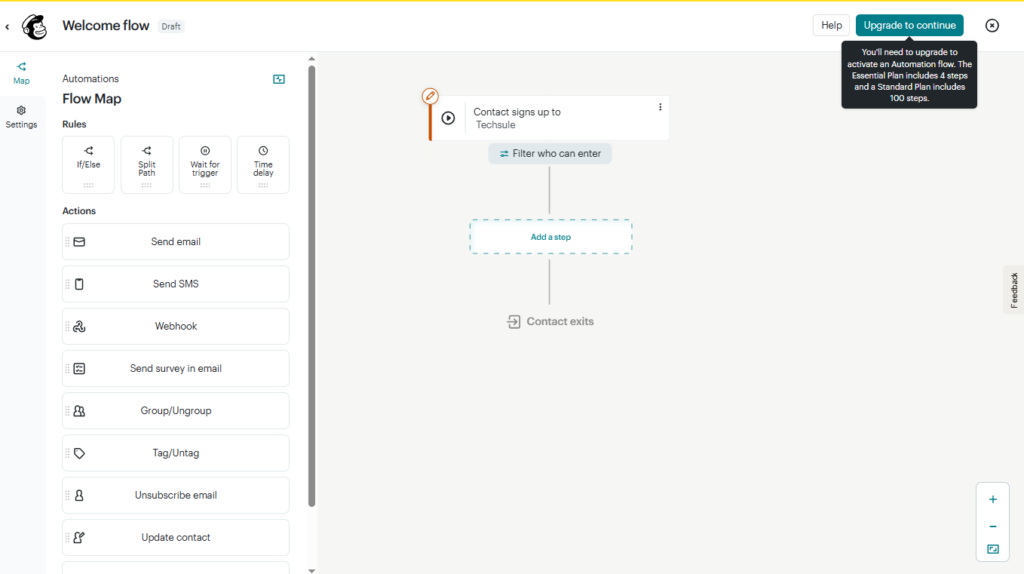
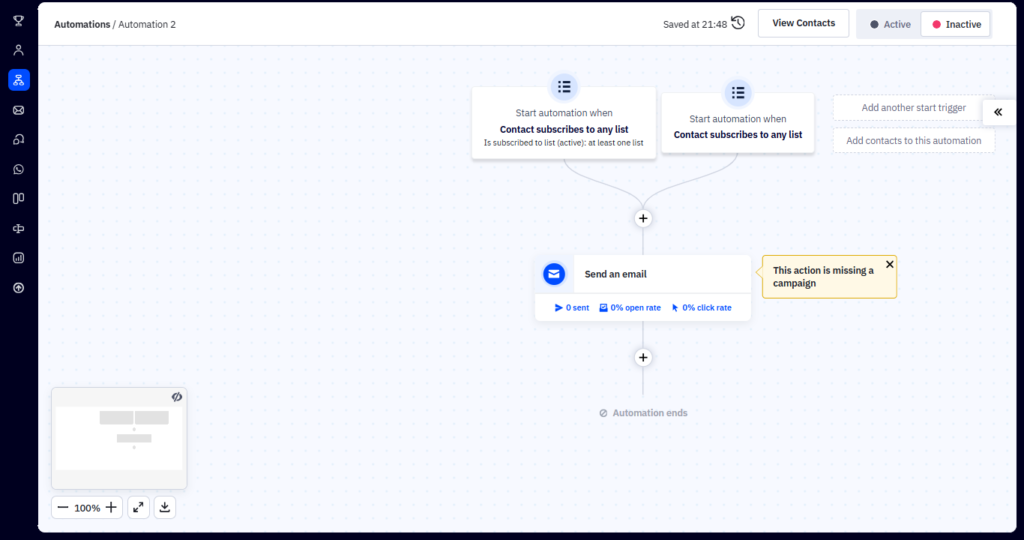
The screenshots highlight the difference in automation philosophy between the two platforms. Mailchimp focuses on simple, easy-to-build customer journeys for common marketing scenarios, while ActiveCampaign provides a more advanced automation builder with greater flexibility, deeper workflow customization, and a wider range of triggers and actions.
ActiveCampaign Automation Builder
ActiveCampaign offers a powerful visual automation builder with advanced conditions, goals, CRM actions, and branching logic, making it more suitable for complex marketing workflows.
Audience, CRM, and reporting
Audience Management & CRM
In Mailchimp vs ActiveCampaign, audience management is another section where both products look similar at a distance but behave differently in practice. Mailchimp recommends using one primary audience and organizing it with tags and segments. Its segmenting tools can filter by location, signup source, activity, tags, groups, and other audience data, while its marketing CRM surfaces pre-built segments, top locations, growth sources, common tags, and customer lifetime value on the audience dashboard.
ActiveCampaign’s segmentation is more dynamic and more deeply tied to automation. Official docs define segments using actions, website visits, field values, and tags, and note that segments update in real time. Beyond segmentation, ActiveCampaign offers contact scoring and enhanced CRM add-ons with pipelines, stages, deals, tasks, ownership changes, automated 1:1 emails, forecast reporting, and deal automation. That makes ActiveCampaign stronger wherever marketing needs to connect directly to lead qualification or pipeline management.
The clearest recommendation is this: if the buyer mainly needs better audience organization and targeted messaging, Mailchimp is sufficient and easier to live with. If the buyer needs lifecycle orchestration that spans list behavior, site behavior, lead scoring, and sales stages, ActiveCampaign is considerably more capable. That conclusion also aligns with recent comparative reviews, which repeatedly praise ActiveCampaign’s CRM and list-management depth over Mailchimp’s more rigid audience model.
Mailchimp Audience
Mailchimp’s Audience section helps users manage subscribers, organize contacts, create segments, and track audience growth from a single dashboard.
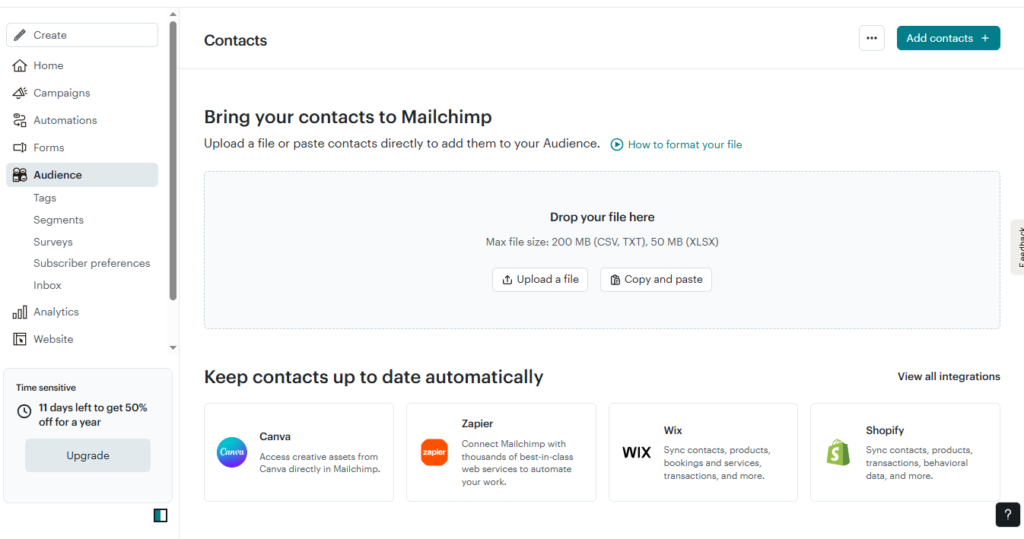
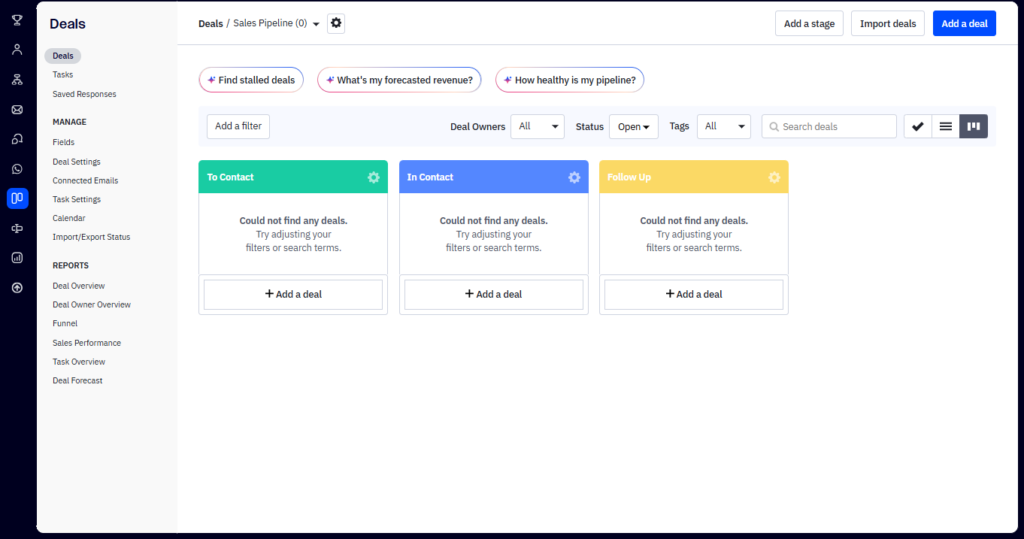
The screenshots demonstrate the difference between contact management and customer relationship management. Mailchimp focuses primarily on organizing email subscribers and audience segmentation, while ActiveCampaign extends beyond contact management by integrating sales pipelines, deal tracking, and CRM functionality.
ActiveCampaign CRM
ActiveCampaign’s CRM allows businesses to manage leads, track deals through different sales stages, and align marketing automation with sales activities.
Mailchimp vs ActiveCampaign Analytics & Reporting
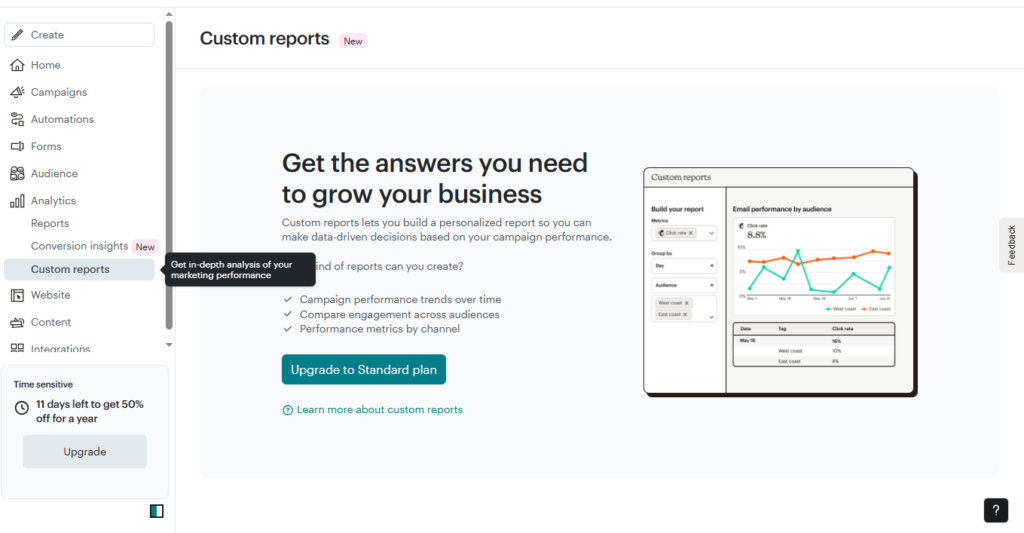
For Mailchimp vs ActiveCampaign, reporting should be discussed as a decision-making tool, not a vanity-metric list. Mailchimp says its analytics suite covers email campaigns, automation, landing pages, and ads, and its landing page reporting includes visitors, clicks, conversions, and revenue. On the pricing side, Standard adds custom reports, while Premium adds more advanced support and segmentation. Third-party reviews generally consider Mailchimp’s reporting thorough for SMB use cases, especially when the user mainly cares about campaign performance and audience trends.
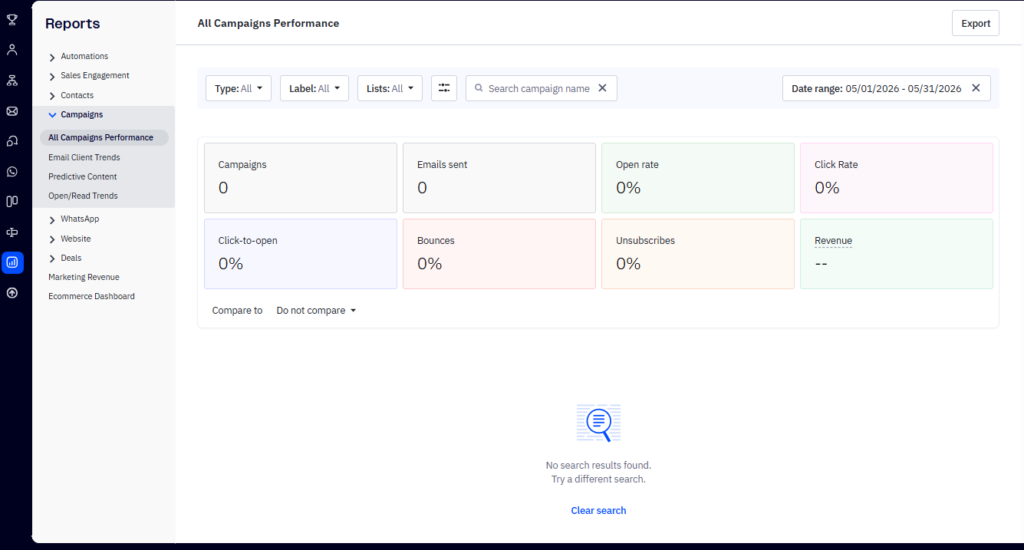
ActiveCampaign’s reporting becomes more persuasive when you need to tie performance to actions and pipeline outcomes. Its Campaigns Performance report includes sends, opens, clicks, unsubscribes, bounces, click-to-open rate, and ecommerce revenue where supported. Custom Reports are designed to combine marketing and sales data, while higher plans add advanced reporting, attribution, conversion tracking, predictive sending, and event tracking. ActiveCampaign also supports Google Analytics tagging and site tracking, which can make reporting feel more connected to downstream business outcomes.
A practical way to write this section is to say that Mailchimp is strong for “what happened in the campaign,” while ActiveCampaign is stronger for “what happened next.” That is exactly the distinction a buyer investigating Mailchimp vs ActiveCampaign needs to understand before spending money.
Lead capture and economics
Landing Pages & Lead Generation Tools
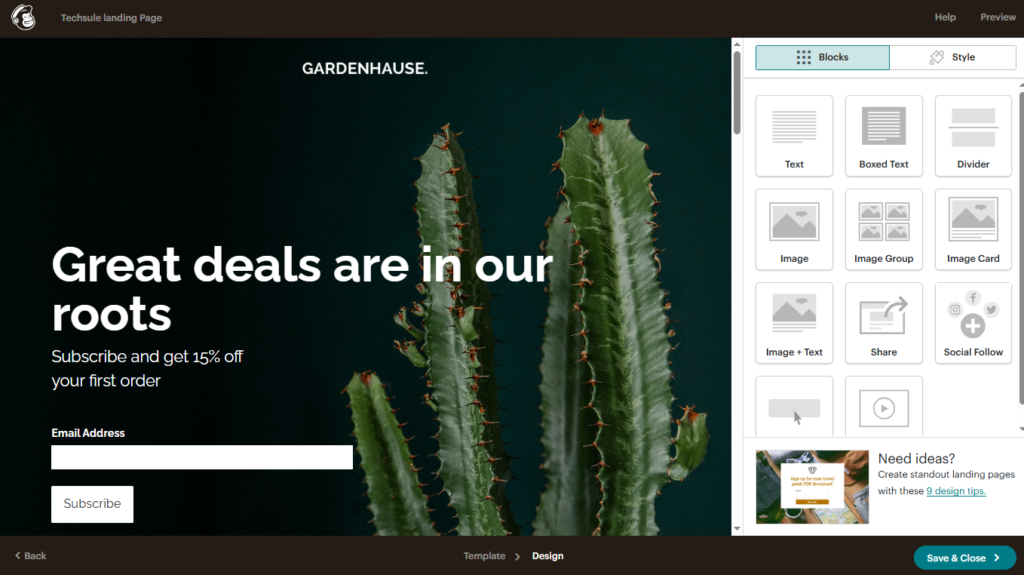
In Mailchimp vs ActiveCampaign, Mailchimp has a notably strong case for lightweight lead generation. Its official landing page materials emphasize unlimited landing pages, drag-and-drop editing, landing-page subdomains, simple mobile landing pages, and analytics for views, clicks, conversions, and revenue. Mailchimp also lets the user choose audiences and tags for landing pages, which supports list growth without needing a separate page builder for simple campaigns.
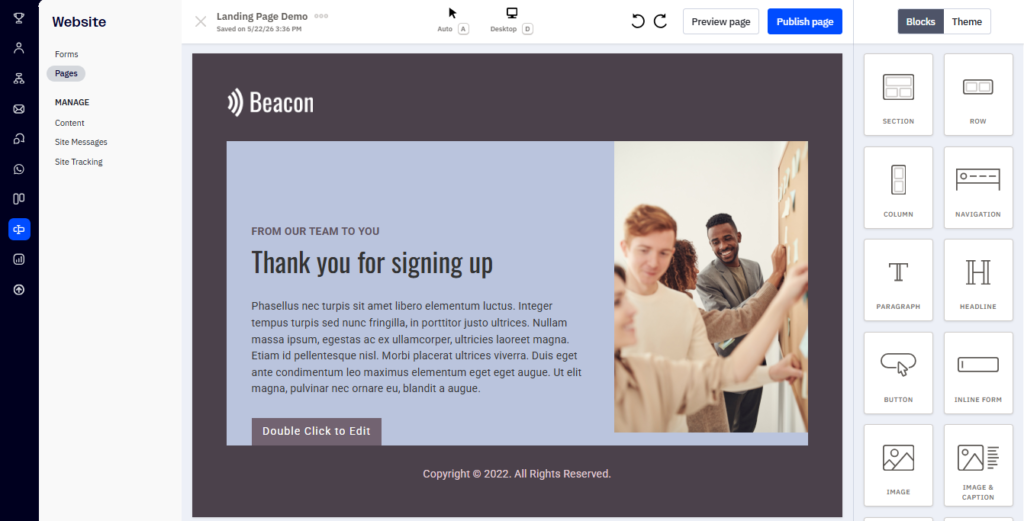
ActiveCampaign’s Pages tool is also solid, but the reason to pick it is different. ActiveCampaign Pages uses templates and a drag-and-drop page designer, supports inline forms and existing forms, allows Google Analytics code and site tracking, and is explicitly positioned as a way to trigger automated workflows after conversion. In other words, the page is less of a standalone asset and more of an entry point into a broader automation engine.
So the right recommendation is not that one builder is categorically better. Mailchimp is the better fit if the page itself is a major part of the marketing workflow and the buyer wants something self-contained and simple. ActiveCampaign is the better fit if forms and landing pages are only the beginning of a more advanced follow-up sequence.
Mailchimp vs ActiveCampaign Pricing: Which Offers Better Value?
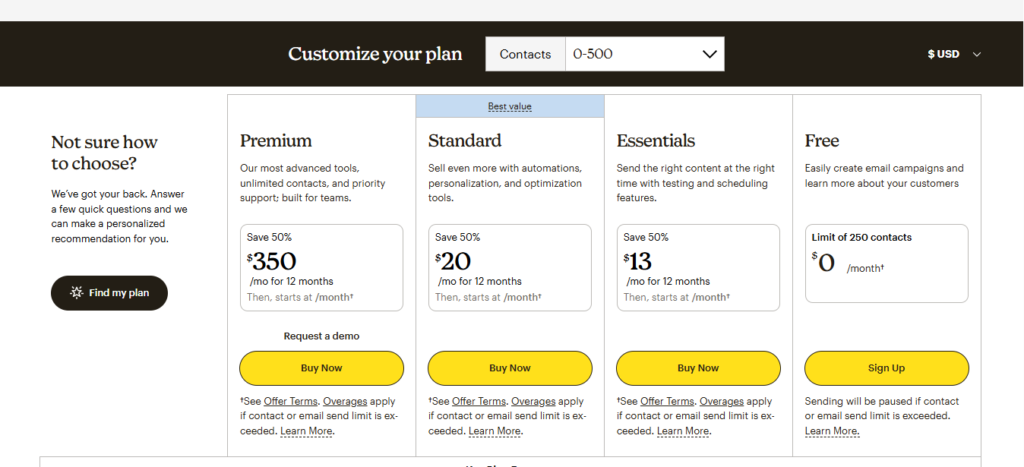
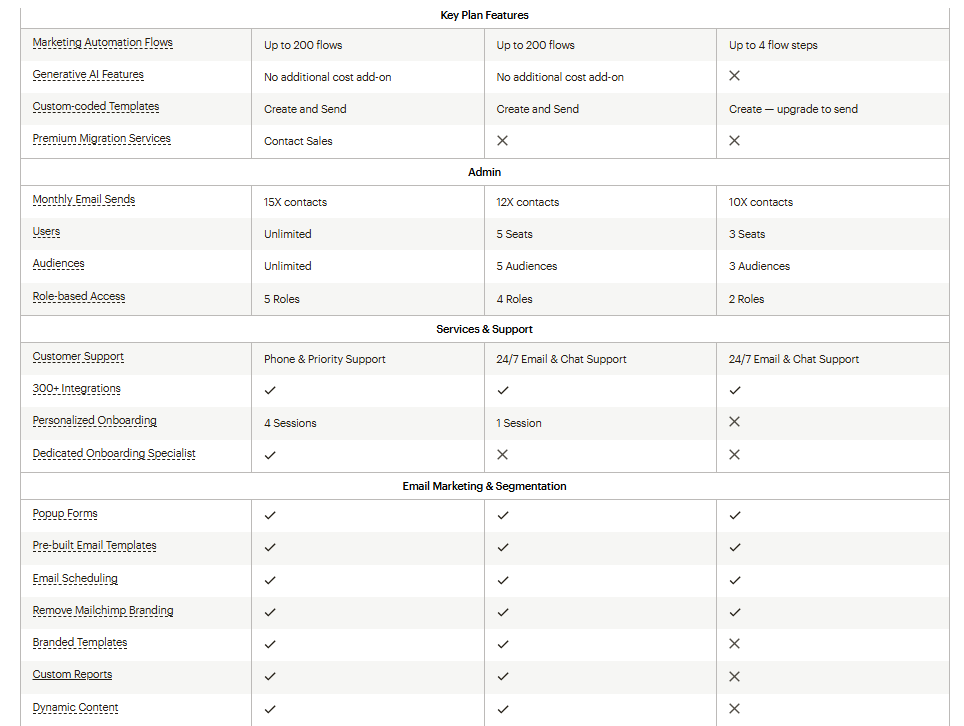
In Mailchimp vs ActiveCampaign, value depends on when the buyer needs serious automation, not just on who has the lowest headline price. Mailchimp’s free plan includes up to 250 contacts and 500 sends per month, plus one audience, basic reporting, a one-click welcome email, and access to tools like landing pages and forms. Paid plans add seats, sending power, automation depth, segmentation, testing, and support. Official Mailchimp pages clearly market starting prices of $13 per month for Essentials, $20 for Standard, and $350 for Premium, though plan baselines vary by contact tier.
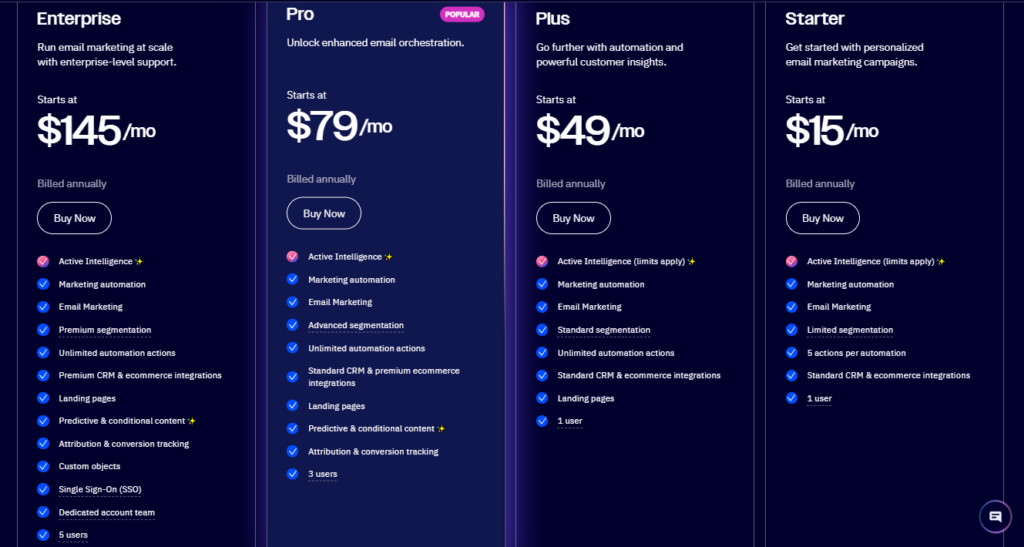
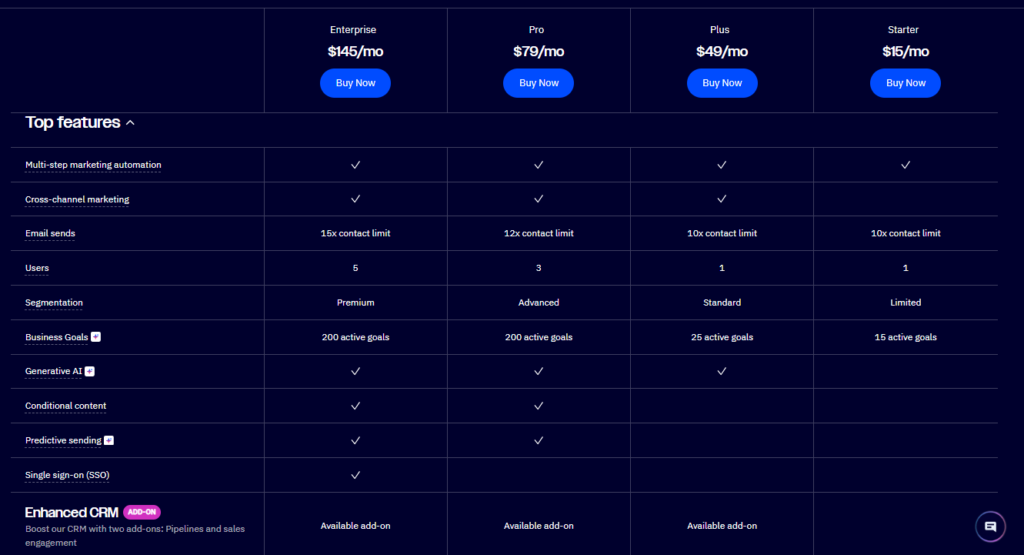
ActiveCampaign does not offer a permanent free plan, but it does give a 14-day free trial and starts lower than many buyers expect for an automation-focused platform: $15 per month for Starter, $49 for Plus, $79 for Pro, and $145 for Enterprise at the commonly cited 1,000-contact baseline in ActiveCampaign’s own pricing and comparison materials. The more important point is feature timing: real multi-step automation starts immediately, and higher tiers push into attribution, predictive sending, advanced reporting, and landing pages faster than Mailchimp does.
There are also billing details worth flagging in a serious article. Mailchimp counts subscribed, unsubscribed, and non-subscribed contacts in its contact total, while archived, cleaned, and deleted contacts do not count; Mailchimp also recommends using one main audience, which hints at the management cost of multiple audiences. ActiveCampaign’s contact-limit documentation is more nuanced: accounts created on or after November 3, 2025 count all contacts regardless of list status, while older accounts count only active contacts. That means any pricing verdict should tell readers to check contact-count rules before migrating.
Pricing comparison table for WordPress
| Platform | Plan | Free plan or trial | Entry price per month | Baseline used | Key limits or standout inclusions | Best for |
|---|---|---|---|---|---|---|
| Mailchimp | Free | Free plan | $0 | 250 contacts | 500 sends/month, 1 audience, basic reporting, one-click welcome email, landing pages/forms available to try | Beginners testing email marketing |
| Mailchimp | Essentials | 14-day trial | Starts at $13 | 500 contacts | 10x send limit, 3 audiences, 3 seats, all templates, A/B testing, automation flows up to 4 steps | Small teams sending newsletters regularly |
| Mailchimp | Standard | 14-day trial | Starts at $20 | 500 contacts | 12x send limit, 5 audiences, expanded automation flows, advanced segmentation, custom report, onboarding | Growing marketers needing more personalization |
| Mailchimp | Premium | Contact sales for larger setups; 1-month trial for qualified users | Starts at $350 | Base price includes 10,000 contacts | 15x send limit, unlimited audiences and seats, phone support, enhanced segmentation/testing | Large teams that want Mailchimp at scale |
| ActiveCampaign | Starter | 14-day free trial | $15 | 1,000 contacts | 10x send limit, 5 actions per automation, site tracking, A/B tests, campaign reporting, forms, marketing CRM | Budget-conscious teams that still need real automation |
| ActiveCampaign | Plus | 14-day free trial | $49 | 1,000 contacts | Landing pages, multichannel automation, AI content generation, basic segmentation/reporting, CRM add-ons available | SMBs moving beyond basic email tools |
| ActiveCampaign | Pro | 14-day free trial | $79 | 1,000 contacts | 12x send limit, advanced triggers/actions, automation A/B testing, conditional content, predictive sending, attribution | Teams running sophisticated journeys |
| ActiveCampaign | Enterprise | 14-day free trial | $145 | 1,000 contacts | 15x send limit, premium segmentation/reporting, custom objects, SSO, dedicated support team | Advanced teams with security and scale needs |
Table note: Mailchimp publicly surfaces entry pricing at different contact tiers than ActiveCampaign, so this table is best read as a baseline rather than an exact apples-to-apples cost model. Final published pricing should always be rechecked before the article goes live.
Decision framework
Mailchimp vs ActiveCampaign Pros and Cons
A strong Mailchimp vs ActiveCampaign article should summarize trade-offs directly instead of repeating feature lists. Buyers usually want a compact decision frame after reading pricing, automation, and CRM sections, so a clean pros-and-cons table helps the article convert.
| Platform | Pros | Cons |
|---|---|---|
| Mailchimp | Easier for beginners to learn; useful free plan; polished drag-and-drop editor; strong landing pages and audience-centric marketing CRM; broad template and integration ecosystem | Advanced automation and dynamic content are gated behind higher plans; audience model can complicate organization and billing; weaker sales CRM depth than ActiveCampaign; pricing rises as lists grow |
| ActiveCampaign | Best-in-class automation depth for SMBs; stronger segmentation, site tracking, scoring, and branching; deal pipelines and sales-process automation; advanced attribution/reporting at higher tiers; free onboarding and migration resources | Steeper learning curve; no permanent free plan; some CRM depth depends on add-ons; pricing and contact-limit rules require closer attention before purchase |
The table above is consistent with both vendors’ own product documentation and recent reviewer consensus. Mailchimp’s strengths cluster around usability and lightweight all-in-one marketing, while ActiveCampaign’s strengths cluster around automation maturity and CRM-connected execution.
Conclusion: Which Platform Should You Choose?
Both Mailchimp and ActiveCampaign are powerful email marketing platforms, but they are built for different types of users and business goals.
If you want an easy-to-use platform with a simple interface, beginner-friendly setup, and solid basic email marketing tools, Mailchimp is a great choice. It works well for small businesses, bloggers, startups, and users who mainly focus on newsletters, simple automation, and quick campaign creation.
However, if your goal is advanced automation, deep customer segmentation, CRM integration, sales pipelines, and powerful marketing workflows, ActiveCampaign is clearly the stronger platform. It is designed for businesses that want to scale their email marketing with more personalization and automation power.
Here is the final verdict:
| Best For | Recommended Platform |
|---|---|
| Beginners & Simple Email Marketing | Mailchimp |
| Advanced Automation | ActiveCampaign |
| Easier Learning Curve | Mailchimp |
| CRM & Sales Features | ActiveCampaign |
| Small Businesses & Creators | Mailchimp |
| Growing Businesses & Agencies | ActiveCampaign |
Choose Mailchimp if you:
- Want a beginner-friendly platform
- Need simple email campaigns
- Prefer an easy dashboard and setup process
- Run a small business or personal brand
Choose ActiveCampaign if you:
- Need advanced automation workflows
- Want built-in CRM and sales tools
- Plan to scale your marketing strategy
- Need detailed customer segmentation and analytics
The most defensible final verdict for Mailchimp vs ActiveCampaign is that ActiveCampaign is the better platform overall for marketers who expect to build increasingly complex customer journeys, while Mailchimp is the better platform for buyers who value simplicity, faster adoption, and a lower-friction starting point. That verdict lines up with feature depth, CRM capability, automation range, and the way independent reviewers score the two products today.
If you want the strongest one-sentence takeaway for your article, use this: “Choose Mailchimp for ease of use and lightweight growth marketing; choose ActiveCampaign for automation depth, segmentation power, and CRM-driven scale.” That sentence matches the official evidence and will satisfy the intent behind most comparison searches.
If the audience is marketers and small business owners, the safest recommendation ladder is this. Recommend Mailchimp to solopreneurs, creators, local businesses, and newer ecommerce brands that mainly need campaigns, forms, landing pages, and simple lifecycle messaging. Recommend ActiveCampaign to SaaS companies, B2B service firms, ecommerce teams, agencies, and growth-focused SMBs that need branching automation, lead qualification, attribution, or a sales pipeline tied to marketing behavior. That gives readers a decision they can actually use, which is what makes a comparison article more rankable and more persuasive.
Final Verdict: ActiveCampaign is the stronger platform overall for businesses that need powerful automation, CRM functionality, and advanced segmentation. However, Mailchimp remains the better choice for beginners who value simplicity, ease of use, and a lower barrier to entry.