
Introduction
MailerLite vs ActiveCampaign is one of the most searched comparisons for businesses looking for the best email marketing platform in 2026. Both tools offer powerful email campaigns, automation features, landing pages, and audience management, but they are built for different types of users.
In this detailed comparison, we will break down MailerLite and ActiveCampaign based on pricing, ease of use, automation, templates, CRM features, deliverability, and overall value for money. Whether you are a beginner blogger, small business owner, or growing ecommerce brand, this guide will help you choose the platform that fits your needs best.
Table of Contents
MailerLite vs ActiveCampaign
Executive summary. Choosing between MailerLite vs ActiveCampaign can be difficult for businesses looking for the right email marketing platform. Both MailerLite and -ActiveCampaign are credible email marketing platforms, but they solve different problems. As of May 2026, MailerLite is the stronger fit for most small businesses that want low cost, fast setup, solid automations, landing pages, and even a simple website/blog in one place, while ActiveCampaign is the stronger fit for teams that need deeper automation, site tracking, attribution, and sales-oriented workflows.
- Best for most small businesses: MailerLite. It offers a real free plan, lower paid entry pricing, easier usability, and broader built-in web publishing tools.
- Best for advanced lifecycle marketing: ActiveCampaign. Its automation builder, site tracking, attribution, and CRM-related workflow depth are materially stronger.
- Best price-to-value ratio: MailerLite. Paid plans start lower, and the free tier is still useful for early-stage email programs.
- Best user-review balance: MailerLite currently shows stronger public support sentiment on Trustpilot and a slightly higher G2 score, while ActiveCampaign still rates well on G2 but gets more mixed comments on pricing and support consistency on Trustpilot.
- Bottom line: If your main goal is newsletters, lead capture, and simple-to-mid-level automations, MailerLite is the better default recommendation. If your growth depends on complex behavioral journeys, attribution, and sales-process automation, ActiveCampaign is worth the extra cost and complexity.
Overview of MailerLite vs ActiveCampaign
The real difference in MailerLite vs ActiveCampaign is not whether either platform can send emails. Both can. The difference is where each product puts its depth: MailerLite leans into simplicity, affordability, and built-in publishing tools, while ActiveCampaign leans into automation, tracking, and workflow orchestration across more channels. That makes MailerLite easier to recommend broadly, and ActiveCampaign easier to recommend selectively.
- MailerLite positions itself around email campaigns, automations, landing pages, signup forms, websites, blogs, and monetization tools such as digital products, bookings, and paid newsletter subscriptions.
- ActiveCampaign positions itself around marketing automation, AI-assisted workflows, CRM, analytics, attribution, site and event tracking, SMS, and WhatsApp messaging.
- Recent third-party comparisons keep drawing the same line: MailerLite is simpler and more budget-friendly, while ActiveCampaign is the more advanced automation platform with a stronger sales angle.
- On G2, MailerLite currently shows 4.6/5 from 1,116 reviews, while ActiveCampaign shows 4.4/5 from 14,677 reviews, so both have strong verified-software-review credibility.
- On Trustpilot, the current public snapshot is much more favorable to MailerLite: 4.4/5 from 3,072 reviews versus 2.8/5 from 1,385 reviews for ActiveCampaign.
- In practical terms, MailerLite is an all-in-one tool for sending, capturing, and publishing. ActiveCampaign is a more operational marketing system for teams that want customer journeys tied to deeper behavior and revenue signals.
MailerLite vs ActiveCampaign Dashboard Overview
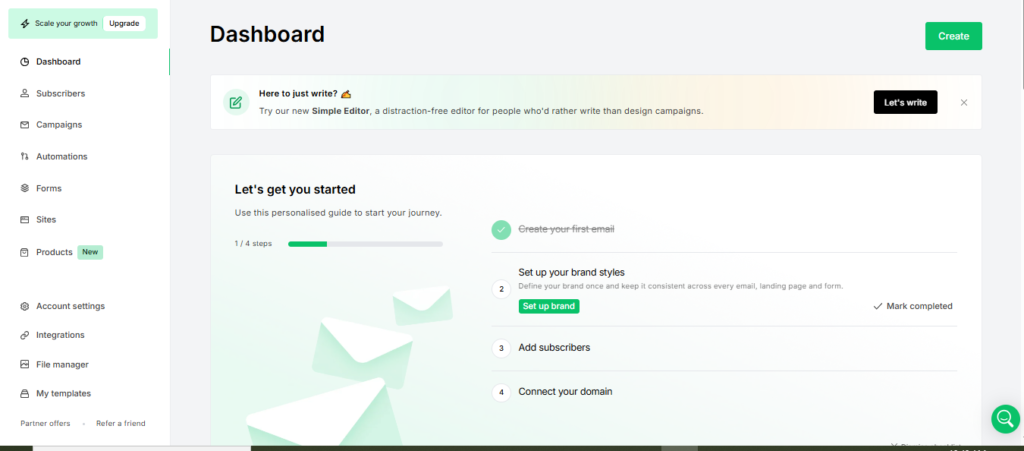

Ease of Use & User Interface
In the MailerLite vs ActiveCampaign comparison for usability, Review summaries on G2 consistently describe it as intuitive and beginner-friendly, while ActiveCampaign gets praise for power but more warnings about learning curve and occasional complexity. ActiveCampaign has improved its automation builder UI, but it still asks users to manage more moving parts.
- G2’s current review summary for MailerLite highlights ease of use, an intuitive interface, and a drag-and-drop editor as major strengths.
- G2’s current review summary for ActiveCampaign highlights strong automation and customer-journey tools, but also flags a steep learning curve and performance issues as recurring drawbacks.
- MailerLite’s main navigation stays focused on a smaller set of jobs: campaigns, automations, forms, landing pages, websites, and subscribers. That makes it easier for non-specialists to find what they need quickly.
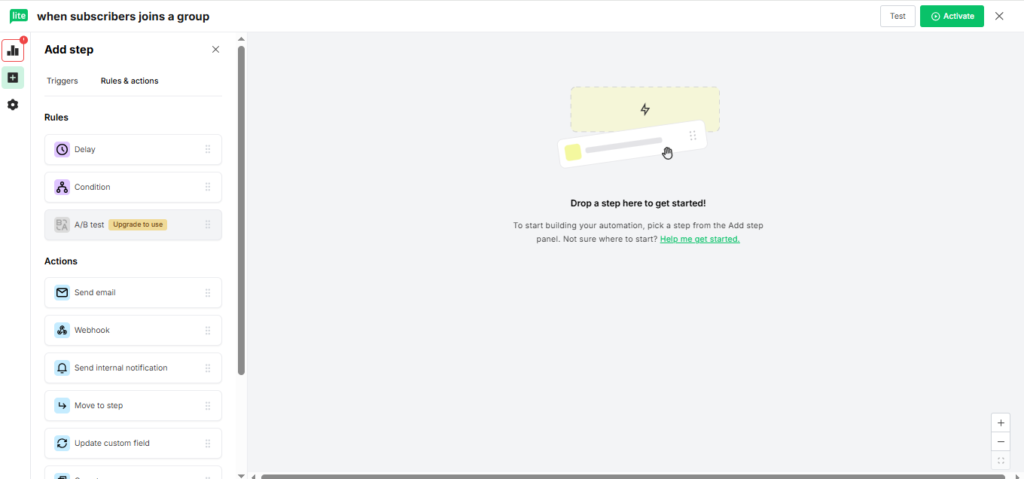
- MailerLite’s automation builder starts from either scratch or templates, and its logic is framed around a simple left-panel model of triggers, rules, and actions.
- ActiveCampaign’s automation builder also offers scratch-built flows and recipes, but it adds more triggers, logic, tracking, segmentation, and cross-channel considerations, which is great for experts and heavier for beginners.
- ActiveCampaign did modernize the automation builder with a simpler, more visually appealing interface in late 2024, which helps, but it does not change the fact that the product asks users to think more like systems builders.
Email Editor & Campaign Builder
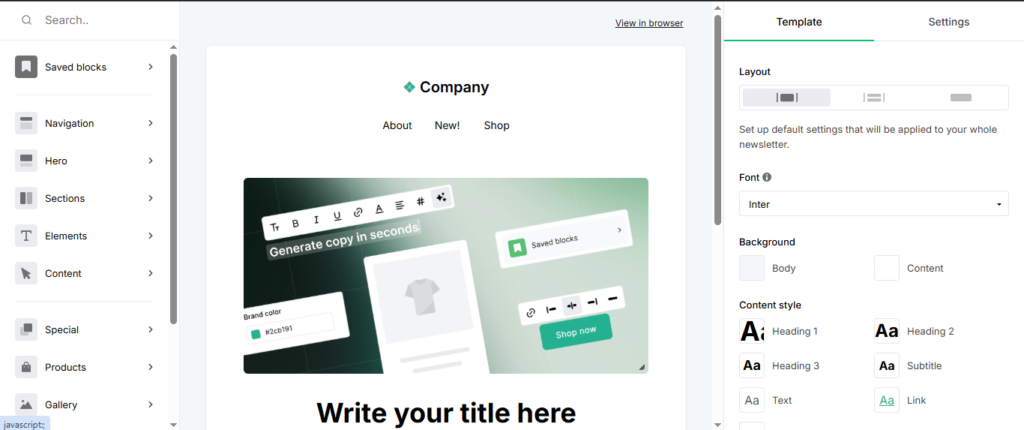
Both platforms are good here, but they win in different ways. MailerLite’s editor is easier to learn and comes with a larger headline template count in current public materials, while ActiveCampaign gives users more campaign-building options, more builder modes, and stronger testing support around split-test sends. For a small team that mainly sends newsletters, MailerLite’s editor is usually the faster path.
- MailerLite’s current public product copy highlights 150+ templates and a drag-and-drop editor for newsletters, landing pages, websites, and pop-ups.
- MailerLite’s email editor supports AI-generated content, reusable design blocks, video blocks, social blocks, and saved custom blocks for future campaigns.
- MailerLite also offers a Custom HTML editor, but that is positioned as an Advanced-plan feature on the pricing page.
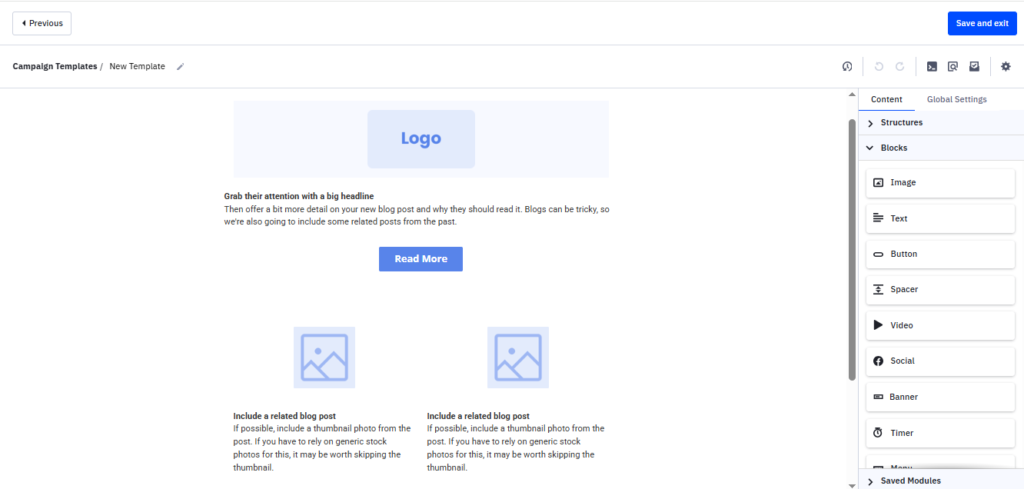
- ActiveCampaign’s reimagined Email Designer is positioned as easier to navigate and more reliable for branded email creation.
- ActiveCampaign says it offers more than 125 templates, organized by business goal, layout, inspiration, and past campaigns, and it also supports AI-assisted building and HTML workflows.
- ActiveCampaign gives users multiple builder options inside campaign creation, including its newer Email Designer, text-only emails, HTML builder, and a Classic Designer, which gives advanced users more flexibility than MailerLite but also more choice to manage.
- ActiveCampaign’s split-test workflow includes spam-check scoring and previews during campaign setup, which is a useful practical advantage for teams that test aggressively before sending.
Email Editor Comparison
Automation Features
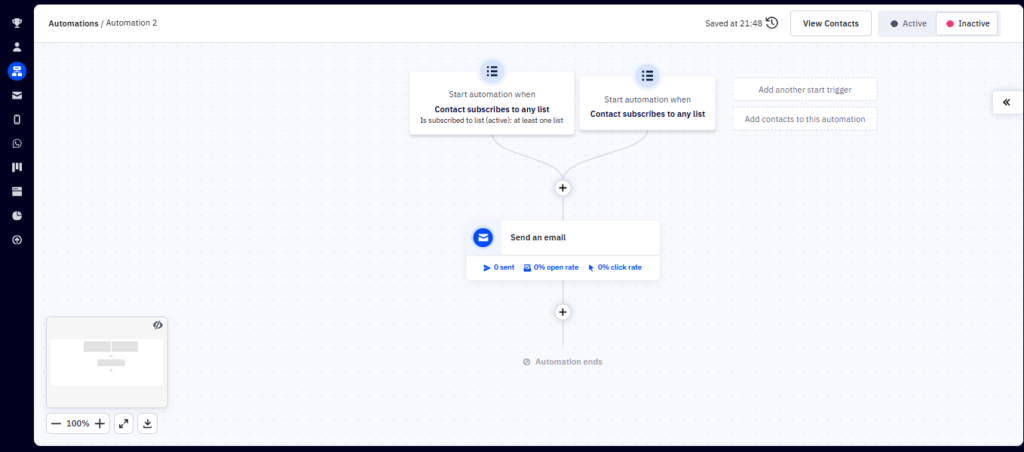
Automation is the biggest deciding factor in MailerLite vs ActiveCampaign for advanced marketers. MailerLite’s automation tools are very solid for welcome series, lead magnets, nurturing, ecommerce basics, and lightweight testing. ActiveCampaign, however, goes further into branching logic, site behavior, attribution triggers, cross-channel actions, and sales-related automation. If automation is the main buying driver in MailerLite vs ActiveCampaign, ActiveCampaign wins.
- MailerLite lets users build workflows from scratch or from templates using triggers, rules, and actions in a visual editor.
- MailerLite supports A/B testing across campaigns, automations, forms, pop-ups, and landing pages, and its multivariate testing can test up to 8 email versions across up to 3 elements.
- MailerLite’s A/B testing can cover up to 5 versions of a single element, and its automation-specific split testing supports experiments on Delay and Email steps.
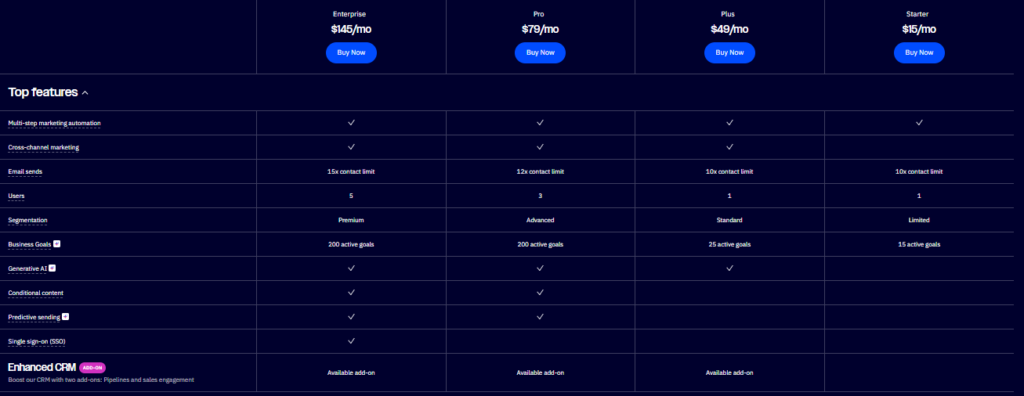
- ActiveCampaign’s current Starter plan includes marketing automation but caps automations at 5 actions per automation, while Plus and above move to unlimited automation actions.
- ActiveCampaign’s split testing can evaluate up to 5 variations at once and can test not only email content but also automations and broader journeys.
- ActiveCampaign Site Tracking lets the platform react in real time to page visits, page categories, and identified contact behavior, which enables behavior-based messages, score changes, automation forks, and sales-pipeline movement.
- ActiveCampaign also layers in conversion attribution and “Conversion occurs” triggers, which makes it better suited to teams optimizing full funnels rather than just email sequences.
- EmailToolTester’s 2026 review calls ActiveCampaign the most powerful automation tool it has tested, which fits the product evidence on the official site.
Automation Workflow Comparison
Pricing & Plans
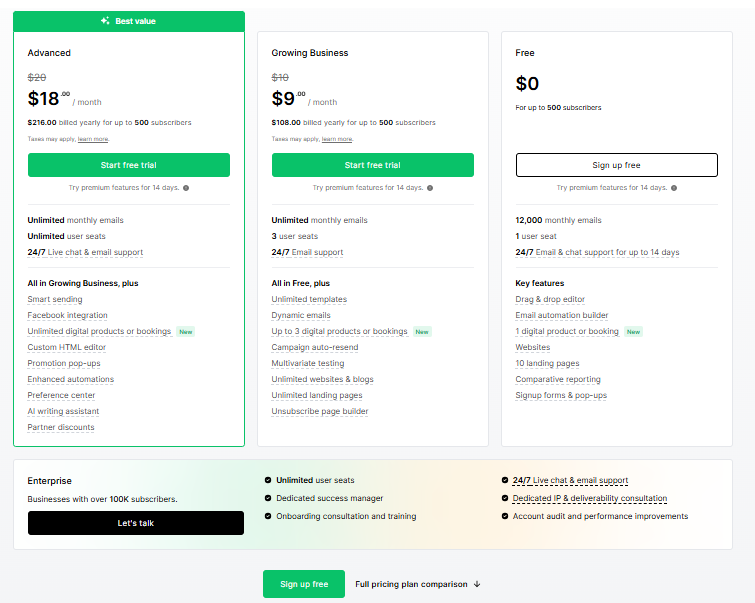
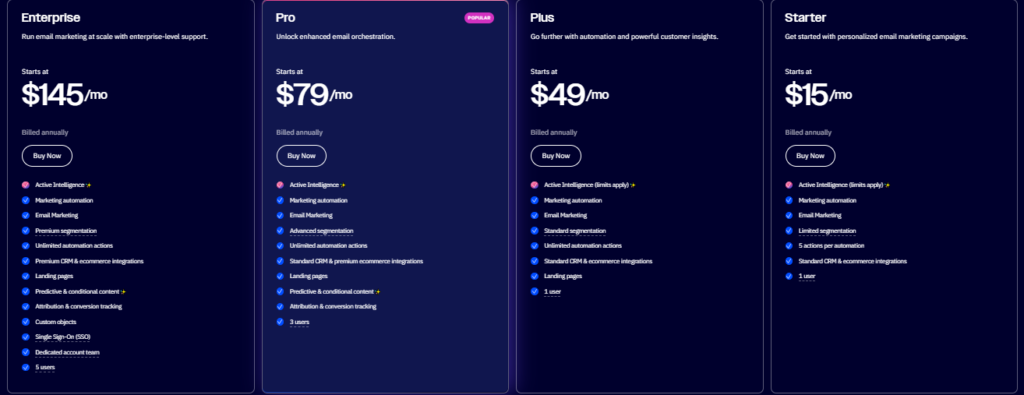
Pricing is one of MailerLite’s strongest arguments and one of ActiveCampaign’s biggest friction points. MailerLite clearly wins on entry cost and free-tier access, while ActiveCampaign now asks users to pay more earlier, and newer accounts also need to watch how contact limits are calculated. For most small businesses, the pricing gap is large enough to matter.
| Platform | Free / Trial | Entry Plan | Mid-Tier Sample | Important Limits / Notes |
|---|---|---|---|---|
| MailerLite | Free plan: $0 | Growing Business from $10/mo | Advanced from $20/mo | Free plan covers up to 500 subscribers and 12,000 monthly emails; paid plans unlock more support and advanced features |
| ActiveCampaign | No free plan; 14-day trial | Starter from $15/mo for 1,000 contacts | Plus from $49/mo; Pro from $79/mo | Starter caps automations at 5 actions; newer accounts created on or after Nov. 3, 2025 count all contacts toward limits; enhanced CRM features are add-ons |
The table uses currently published starting prices and plan notes from the official pricing/help materials. MailerLite’s current public examples default to 500 subscribers, while ActiveCampaign’s published “starts at” pricing is framed around 1,000 contacts, so the entry row is directionally useful rather than perfectly apples-to-apples.
- On the current [MailerLite pricing page] the free plan covers up to 500 subscribers and 12,000 monthly emails, while Growing Business starts at $10/month and Advanced starts at $20/month.
- MailerLite’s free plan is still useful, but it is restricted: one seat, 10 published landing pages, and fewer premium support options.
- ActiveCampaign offers a 14-day trial with no credit card required, but no permanent free plan.
- For ActiveCampaign accounts created on or after November 3, 2025, all contacts count toward the contact limit regardless of list status; for accounts created on or before November 2, 2025, only active contacts count.
- ActiveCampaign’s pricing page currently separates major sales-CRM capabilities such as pipeline management, deal records, account records, and lead scoring into enhanced CRM add-ons rather than including them plainly in the base email tiers.
Pricing Comparison
MailerLite vs ActiveCampaign: Quick Comparison Table
If you only need the fastest answer to MailerLite vs ActiveCampaign, the table below covers the decision levers that matter most: cost, automation depth, templates, landing pages, CRM, integrations, deliverability support, and ideal use case. In short, MailerLite is the better buy for simpler marketing stacks, while ActiveCampaign is the better engine for advanced customer journeys.
| Metric | MailerLite | ActiveCampaign |
|---|---|---|
| Starting Price | Free, with paid plans from $10/mo | From $15/mo for 1,000 contacts |
| Free Plan | Yes — up to 500 subscribers | No permanent free plan; 14-day trial |
| Automation | Strong core automation, good A/B testing, solid for welcome flows and simple nurture sequences | Much deeper automation, site/event tracking, split-testing branches, attribution, cross-channel workflows |
| Templates | 150+ templates in current public materials | 125+ templates |
| Landing Pages | Yes — free users can publish up to 10 pages; paid plans unlock more depth | Yes — current pricing copy positions landing pages on Plus and above |
| CRM | Groups/tags, segments, custom fields, CRM integrations; no native full sales pipeline | Contact records in core plans; pipeline, deal, account, and lead-scoring features through enhanced CRM add-ons |
| Integrations | 100+ native integrations, with public marketing copy also citing 140+ | 1,000+ integrations |
| Deliverability Reputation | Good; EmailToolTester feature-based rating of 3.5/5 | Slightly stronger; EmailToolTester feature-based rating of 4.0/5 |
| Best For | Small businesses, creators, consultants, simple funnels, low-cost growth | Mature lifecycle marketing, B2B teams, advanced ecommerce, complex segmentation and automation |
The values in this table come from current official product/pricing pages and recent review or testing sources.
This decision diagram reflects the current feature and pricing evidence from official pages plus recent third-party testing.
- MailerLite wins the “default recommendation” test because it solves more of the common small-business stack at a lower cost and lower complexity.
- ActiveCampaign wins the “specialist recommendation” test because its automation and reporting depth are stronger once your team is sophisticated enough to use them.
- If you are replacing multiple lightweight tools such as a simple website builder, landing-page tool, and newsletter sender, MailerLite can often reduce your software sprawl.
- If you already run a bigger stack with sales workflows, advanced segmentation, and conversion tracking, ActiveCampaign is more likely to fit cleanly into the system you already have.
- For most readers landing on a “MailerLite vs ActiveCampaign” article, the real practical question is simple: do you need power that you will actually use this quarter, or power you might use later. If the answer is “later,” MailerLite is usually the better immediate decision.
- If the answer is “right now,” especially around behavioral triggers, attribution, and lead routing, ActiveCampaign justifies the heavier setup burden.
Email Deliverability
Deliverability should not be treated as a single magic score, because both platform choice and sender behavior matter. The most useful current independent source here is [EmailToolTester](https://www.emailtooltester.com/en/blog/new-email-deliverability-test/?utm), which now uses a feature-based deliverability framework instead of inbox-placement rankings; under that system, ActiveCampaign currently scores slightly better than MailerLite. That gives ActiveCampaign a modest edge on deliverability support, but not a reason by itself to ignore price, fit, or ease of use.
- EmailToolTester’s latest feature-based deliverability rating gives ActiveCampaign 4.0/5 and MailerLite 3.5/5.
- EmailToolTester specifically praises ActiveCampaign for authentication support, bounce handling, and a responsive deliverability team, while noting the lack of a deliverability dashboard or health score.
- The same framework credits MailerLite for SPF and DKIM authentication, strict anti-purchased-list policies, and list-cleaning integrations, but marks it down for lacking DMARC guidance inside its authentication setup and for not offering a deliverability dashboard or score.
- ActiveCampaign’s official deliverability guidance emphasizes sending-domain setup, DKIM, DMARC, custom mail server domains, and domain warm-up best practices.
- MailerLite also emphasizes domain authentication, has an automatic authentication flow, and maintains a dedicated deliverability help center.
- MailerLite offers a dedicated IP option and suggests it for high-volume senders sending 50,000 or more emails per week.
- ActiveCampaign offers a one-on-one deliverability consultation service for $79, which can matter for teams with bigger lists or sender-reputation issues.
- From a buyer perspective, the fair conclusion is this: ActiveCampaign currently has the stronger deliverability-support stack, but MailerLite is still a credible sender platform if you authenticate your domain, keep lists clean, and follow good sending practices.
Landing Pages & Website Builder
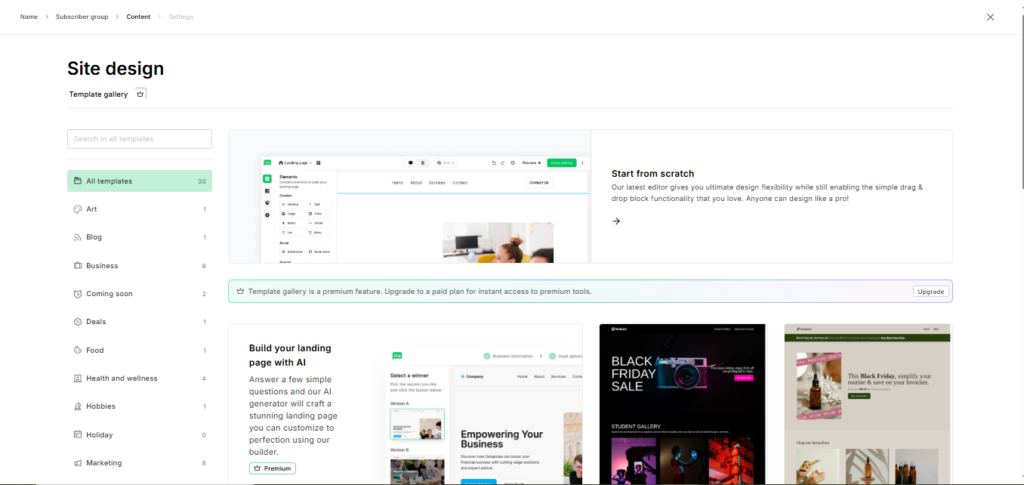
This is the section where MailerLite expands beyond email most clearly. It offers landing pages, pop-ups, full websites, blogs, and monetization tools in one platform, while ActiveCampaign focuses more narrowly on landing pages that plug into forms, tracking, and automations. If your business wants email plus a simple web presence in one tool, MailerLite is the stronger fit.
- MailerLite’s free users can publish up to 10 landing pages, while paid plans unlock unlimited pages and more advanced features.
- MailerLite’s current landing-page builder emphasizes a fast UI, 70+ premade blocks, reusable blocks, SEO features, custom HTML injection, A/B testing, and custom-domain or free-domain publishing.
- MailerLite landing pages can also deliver lead magnets, run automated sequences, sell products, use surveys and quizzes, and connect to analytics tools like Google Analytics and Meta Pixel.
- MailerLite goes further by including a drag-and-drop website builder that can create a blog, personal site, or online shop, with lead capture and monetization built in.
- On the free side, MailerLite’s website feature currently includes one website, unlimited traffic and storage, landing pages, pop-ups, and the drag-and-drop editor; more advanced site features such as live support, blog publishing, custom domains, and multiple websites are tied to paid plans.
- ActiveCampaign’s landing-page tool is strong in a different way: the official product page highlights drag-and-drop building, hundreds of templates, tight connections to email, SMS, WhatsApp, automation workflows, and built-in site tracking/reporting.
- ActiveCampaign’s page builder includes forms, countdowns, buttons, embeds, video, theme controls, preview, publish controls, Google Analytics support, and editable meta information for search and social previews.
- Based on the current public feature pages, MailerLite is the better choice if you want a simple website/blog plus landing pages in one subscription, while ActiveCampaign is better if your landing pages need to sit inside more advanced automation and tracking workflows.
MailerLite vs ActiveCampaign Landing Page Builder

CRM & Sales Features
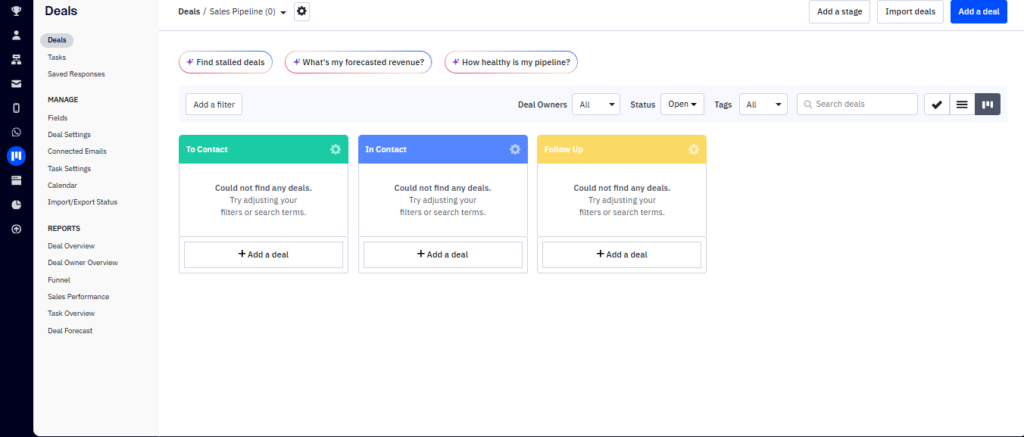
CRM is one of the biggest differences in MailerLite vs ActiveCampaign. MailerLite gives you organized subscriber data, tags, groups, custom fields, and integrations with outside CRMs, but it does not present itself as a full native sales CRM. ActiveCampaign does, although the most sales-forward features now sit behind enhanced CRM add-ons.
- MailerLite organizes subscribers with groups, tags, segments, and custom fields, which is enough for newsletter targeting and many simple nurture programs.
- MailerLite’s CRM strategy is mostly integration-led: its CRM integration category points users toward tools such as Salesflare, Zoho CRM, Microsoft Dynamics 365, and connector layers like Outfunnel.
- ActiveCampaign’s CRM product page emphasizes unifying sales and marketing, automating deal creation and lead assignment, and tracking one-to-one sales emails from inside the platform.
- ActiveCampaign’s pricing matrix shows that pipeline management, deal records, account records, and lead scoring are part of enhanced CRM add-ons rather than baked plainly into the base email tiers.
- ActiveCampaign’s lead-scoring materials also describe both rules-based and predictive lead scoring, using website visits, engagement, and demographics to prioritize likely buyers.
- Site Tracking can feed straight into sales logic in ActiveCampaign, including score changes and movement through stages based on page visits.
- In practical terms, MailerLite is enough if you mainly need audience management for email marketing. ActiveCampaign is better if your email tool is supposed to help your sales team prioritize and close opportunities.
ActiveCampaign CRM Pipeline
Integrations & Third-Party Apps
Both platforms integrate with the core tools most marketers care about, but ActiveCampaign’s ecosystem is much larger. MailerLite covers the typical SMB stack well, while ActiveCampaign is more convincing for businesses with mature ecommerce, ad, CRM, and workflow requirements. In short, MailerLite is sufficient more often; ActiveCampaign is extensible farther.
- MailerLite’s help center says it integrates with over 100 apps, while its broader marketing materials often cite 140+ integrations.
- MailerLite’s most visible native integration set includes Shopify, WooCommerce, WordPress, Zapier, Stripe, Make, and Canva, which covers the typical small-business and creator stack well.
- MailerLite’s Shopify and WooCommerce integrations are not superficial: the WooCommerce integration page explicitly notes abandoned-cart emails, purchase tracking, and product import into campaigns.
- ActiveCampaign says it supports 1,000+ integrations and combines native integrations with API/webhook options for more custom setups.
- ActiveCampaign’s pricing and integrations pages call out connections across ecommerce, ads, Gmail/Outlook, Calendly/Eventbrite, Slack, DocuSign, and premium CRM systems like Salesforce and Microsoft Dynamics.
- When comparing MailerLite vs ActiveCampaign. ActiveCampaign’s ecosystem becomes more valuable when you want automations to coordinate store browsing, SMS, ads, CRM updates, and cross-channel personalization.
- If you are mainly connecting a website, store, form tool, and automation layer, MailerLite will usually feel “integrated enough.” If you need connected systems across marketing, sales, and customer data, ActiveCampaign has the stronger ceiling.
Analytics & Reporting
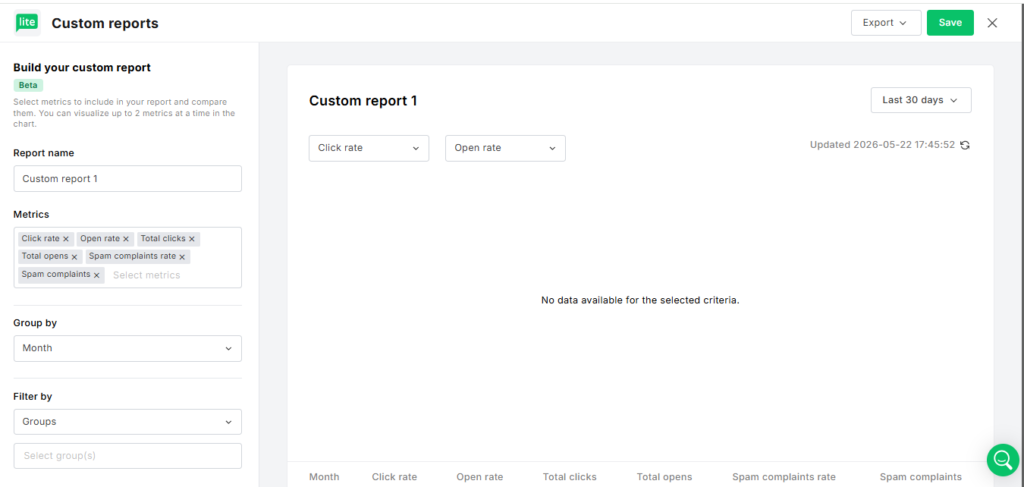
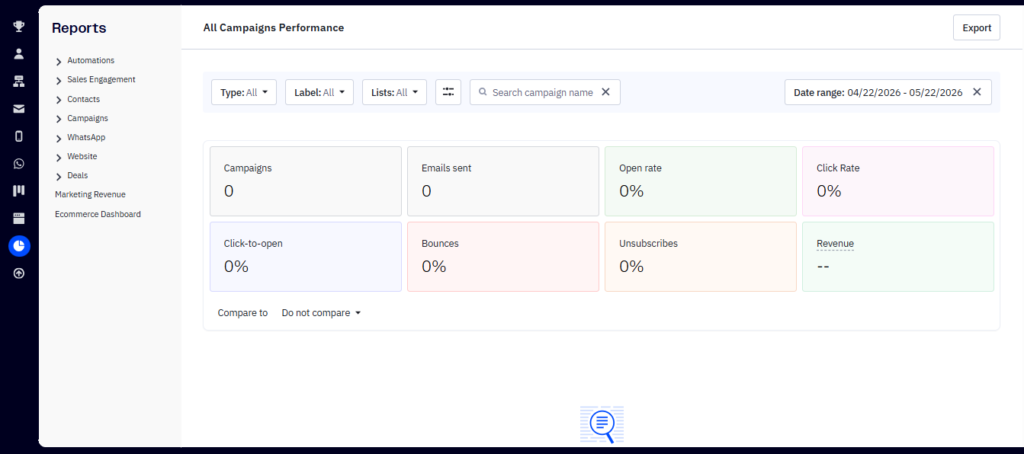
MailerLite is better at straightforward reporting that most small teams can use quickly. ActiveCampaign is better at connecting reporting to individual contacts, conversions, attribution, and cross-channel journeys. So the right answer depends on whether you need “clear campaign reporting” or “funnel-level reporting tied to revenue.”
- MailerLite reports the daily metrics most teams actually use: opens, clicks, click-to-open rate, unsubscribes, spam complaints, and hard/soft bounces.
- MailerLite also includes custom reports, comparative date-range reporting, subscriber analytics, landing-page analytics, form and pop-up conversion tracking, click maps, and ecommerce reporting.
- MailerLite’s analytics pages additionally highlight MCP connectivity so users can analyze email performance data with AI tools such as ChatGPT and Claude.
- ActiveCampaign’s Attribution feature measures which touchpoints influenced conversions and exposes that data inside contact records, segments, and automation triggers.
- ActiveCampaign’s Conversion Attribution report supports count/value views, date filters, attribution windows, source distribution, top conversions, touchpoints leading up to conversion, and detailed exportable data.
- ActiveCampaign’s analytics positioning is explicitly person-centric: it ties actions to specific contacts across email, SMS, WhatsApp, landing pages, purchases, and follow-up automations.
- Site Tracking gives ActiveCampaign a further analytics advantage because it can combine page-level behavior with messaging decisions, which is harder to achieve in simpler email tools.
- For an SMB sending newsletters and lead magnets, MailerLite’s reporting is usually enough and easier to digest. For a team trying to prove channel contribution and optimize customer journeys, ActiveCampaign is the better analytics platform.
Analytics & Reporting Comparison
Customer Support
MailerLite currently has the better support reputation in public review snapshots, but the best real-time support is tied to paid plans. ActiveCampaign offers broad support channels and a strong self-service ecosystem, yet review sentiment is more mixed around support consistency and pricing-related frustration. In this category, MailerLite feels more reassuring for smaller teams.
- MailerLite’s official support article says Growing Business and Advanced users get 24/7 email support, while 24/7 live chat is available on Advanced.
- MailerLite’s homepage also advertises around-the-clock support, a 97% satisfaction rate, and a 5-minute average live-chat response time.
- MailerLite supports self-service learning through a knowledge base, community, academy, tutorials, and an expert directory.
- On urlG2https://www.g2.com, MailerLite currently sits at 4.6/5 from 1,116 reviews, and on urlTrustpilothttps://www.trustpilot.com it currently sits at 4.4/5 from 3,072 reviews, with recent Trustpilot summaries heavily praising support quality and responsiveness.
- ActiveCampaign’s official help materials say customers can use help articles, community, courses, webinars, email, chat, and a virtual assistant.
- ActiveCampaign’s live chat for paying customers is not 24/7 human coverage; the official help page says it is available Monday through Friday from 3 a.m. to 11 p.m. CT and Sunday from 6 p.m. to 11 p.m. CT.
- ActiveCampaign’s current G2 rating is strong at 4.4/5 from 14,677 reviews, but its current Trustpilot snapshot is 2.8/5 from 1,385 reviews, where pricing changes, support consistency, and product sluggishness show up often.
- For a buyer who values “I can get help quickly and not fight the tool,” MailerLite has the clearer support story today. For a buyer who values documentation depth and a larger training ecosystem, ActiveCampaign still offers plenty, but with more mixed public sentiment.
MailerLite vs ActiveCampaign Pros & Cons
MailerLite vs ActiveCampaign ultimately comes down to simplicity versus advanced marketing power. MailerLite is the stronger choice for creators, bloggers, freelancers, and small businesses that want affordable email marketing with an easy learning curve and built-in landing-page tools. ActiveCampaign, on the other hand, is designed for businesses that need deeper automation, advanced customer journeys, behavioral tracking, and CRM-driven workflows.
If your priority is ease of use and lower costs, MailerLite will feel more approachable and efficient. If your business depends heavily on automation logic, segmentation, sales pipelines, and lifecycle marketing, ActiveCampaign offers far more long-term scalability despite the higher complexity and pricing.
For most beginners and growing brands, MailerLite delivers better overall value. For advanced marketers and larger automation-focused teams, ActiveCampaign remains one of the most powerful platforms available today.
| Priority | MailerLite — Pro | MailerLite — Con | ActiveCampaign — Pro | ActiveCampaign — Con |
|---|---|---|---|---|
| Ease of Use | Cleaner UI; quick to learn | Less depth for power users | Powerful once learned | Steeper learning curve |
| Automation | Solid visual workflows; included on free plan | Fewer triggers; no page-view triggers | Best-in-class branching, site + event tracking | Starter caps to 5 actions; richer journeys cost more |
| Pricing | Free plan; lower paid entry | Important extras push many users to Advanced | High ceiling if you need advanced CX | No free plan; add-ons + all-contact billing can raise cost |
| CRM | Groups + custom fields cover basic audience management | No native pipeline / deal CRM | Pipelines, deals, lead scoring, sales automations | Best CRM features are add-ons |
| Analytics | Clear campaign metrics + click maps | Limited attribution depth | Attribution, conversion and contact-level insight | Deeper reporting adds setup complexity |
| Landing Pages | Landing pages plus website/blog tools | Free users start from scratch; custom domain is paid | Hundreds of templates; stronger funnel integration | Landing pages begin on Plus, not Starter |
Conclusion
When comparing MailerLite and ActiveCampaign, the right choice depends on your business size, budget, and marketing goals.
If you are a beginner, blogger, freelancer, or small business owner who wants a clean interface, affordable pricing, and simple email marketing tools, MailerLite is the better option. It is easy to learn, lightweight, and provides excellent value for money without overwhelming users with advanced settings.
On the other hand, ActiveCampaign is ideal for growing businesses, agencies, ecommerce brands, and marketers who need advanced automation, CRM tools, sales pipelines, and highly personalized customer journeys. While it comes with a steeper learning curve and higher pricing, its automation power is among the best in the industry.
In the end, the MailerLite vs ActiveCampaign debate comes down to simplicity vs advanced functionality. MailerLite wins for affordability and ease of use, while ActiveCampaign dominates in automation and CRM capabilities.
For most beginners and small businesses, MailerLite offers the best balance of features and pricing. But for scaling companies focused on advanced marketing automation and customer management, ActiveCampaign is the stronger long-term investment.
Final Verdict
- Final recommendation for most readers: choose MailerLite if you are a small business owner, creator, consultant, coach, or lean marketing team that wants an affordable email platform with landing pages and maybe a simple site in the same tool.
- Final recommendation for advanced teams: choose ActiveCampaign if your team already thinks in terms of lifecycle automation, behavioral triggers, lead scoring, attribution, and sales alignment.
- Clear verdict: for the broad search intent behind “MailerLite vs ActiveCampaign,” MailerLite should usually be recommended first, and ActiveCampaign should be recommended when the buyer explicitly needs advanced automation and is willing to pay for it.
Frequently Asked Questions (FAQ)
The FAQ section is where a comparison post can pick up long-tail search traffic and answer the last buyer objections before conversion. For this MailerLite vs ActiveCampaign query, the highest-value questions are usually about price, automation, CRM, deliverability, and beginner fit. The answers below reflect the current public product information and current review snapshots as of May 2026.
- Is MailerLite cheaper than ActiveCampaign? Yes. MailerLite has a free plan and paid plans from $10/month, while ActiveCampaign has no permanent free plan and starts at $15/month for 1,000 contacts.
- Does ActiveCampaign have a free plan? No. It currently offers a 14-day free trial with no credit card required, but not a free-forever tier.
- Which is better for beginners? MailerLite. Current G2 summaries, Trustpilot sentiment, and recent comparison coverage all point to MailerLite being easier to learn and faster to use for small teams.
- Does MailerLite have a CRM? Not in the same sense ActiveCampaign does. MailerLite has strong subscriber management with groups, segments, and custom fields, but its CRM story is mainly based on integrating third-party CRMs.
- Is ActiveCampaign’s CRM fully included in all plans? Not exactly. Current pricing materials show core contact records, but advanced CRM capabilities like pipeline management, deals, account records, and lead scoring are tied to enhanced CRM add-ons.
- Which is better for landing pages and websites? MailerLite is better for breadth because it includes landing pages plus a website/blog builder. ActiveCampaign is better if your landing pages need tighter integration with advanced automations and tracking.
- Which should most small businesses choose? Most should start with MailerLite, then move to ActiveCampaign only if automation depth, attribution, or sales-process automation becomes a real operational need.